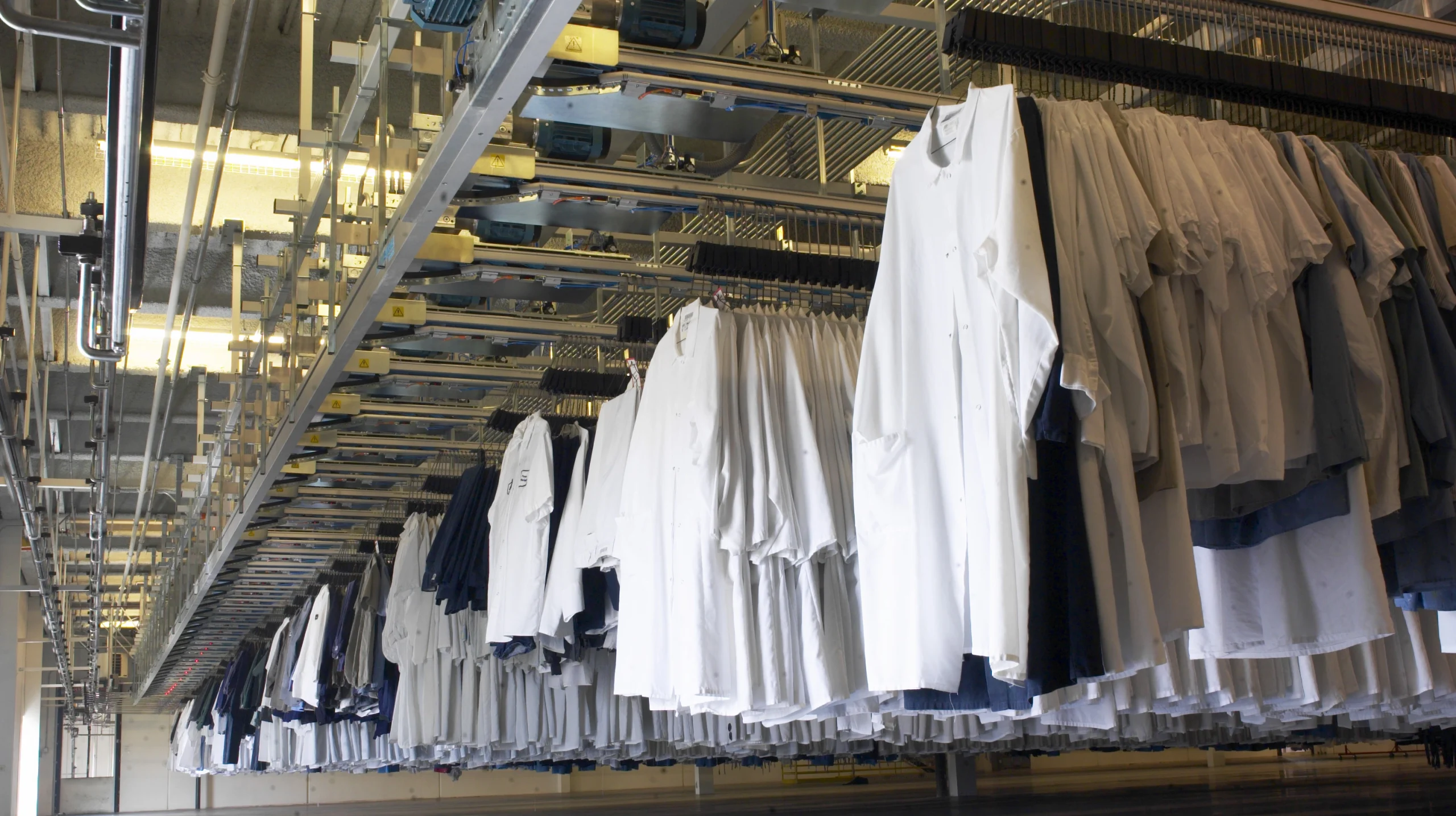
One of any laundry’s most significant operating costs is the purchase of linen and towelling. These items are typically depreciated over a three-year period and generally represent between 11% and 13% of turnover. Importantly, they are paid for well in advance of cost recovery, placing immediate pressure on cash flow and working capital.
Given the scale of this investment, protecting these valuable assets is not optional- it is essential.
Work undertaken by the TSA, using data collated by an independent third party from multiple laundries, revealed a striking statistic: more than 60% of all linen and towelling supplied was lost, damaged or stolen over its lifecycle. This level of attrition has major financial implications. In practical terms, for every £1 spent on textile stock, approximately £0.60 must be spent again to replace lost or prematurely removed items.
This reality highlights the importance of improved stock visibility and control.
Radio Frequency Identification (RFID) technology has been available for some time, although in its early stages the cost of tags limited widespread adoption. However, as RFID has become more established- particularly across continental Europe- tag costs have reduced significantly, making implementation increasingly viable for UK laundries.
Recent projects, such as the Copthorne initiative, demonstrate that tagged items with branded sleeves can now be introduced at a commercially realistic cost.
The fundamental value of RFID lies in traceability. Every item issued carries a unique identity, enabling complete visibility throughout its lifecycle. This transforms textile management from estimation to measurable control. Loss, misuse and unexplained shortages can be identified and addressed systematically rather than accepted as an unavoidable cost of doing business.
For laundries operating in a highly geared rental model, where textile stock is a core revenue-generating asset, improved control over loss rates and lifespan can deliver meaningful financial impact. Reducing unnecessary replacement spend strengthens margins, improves cash flow and enhances operational stability.
As margins remain under pressure across the sector, technology that protects capital investment and improves asset utilisation warrants serious consideration. The question is no longer whether textiles are expensive, that is well understood, but whether sufficient control mechanisms are in place to protect that investment.