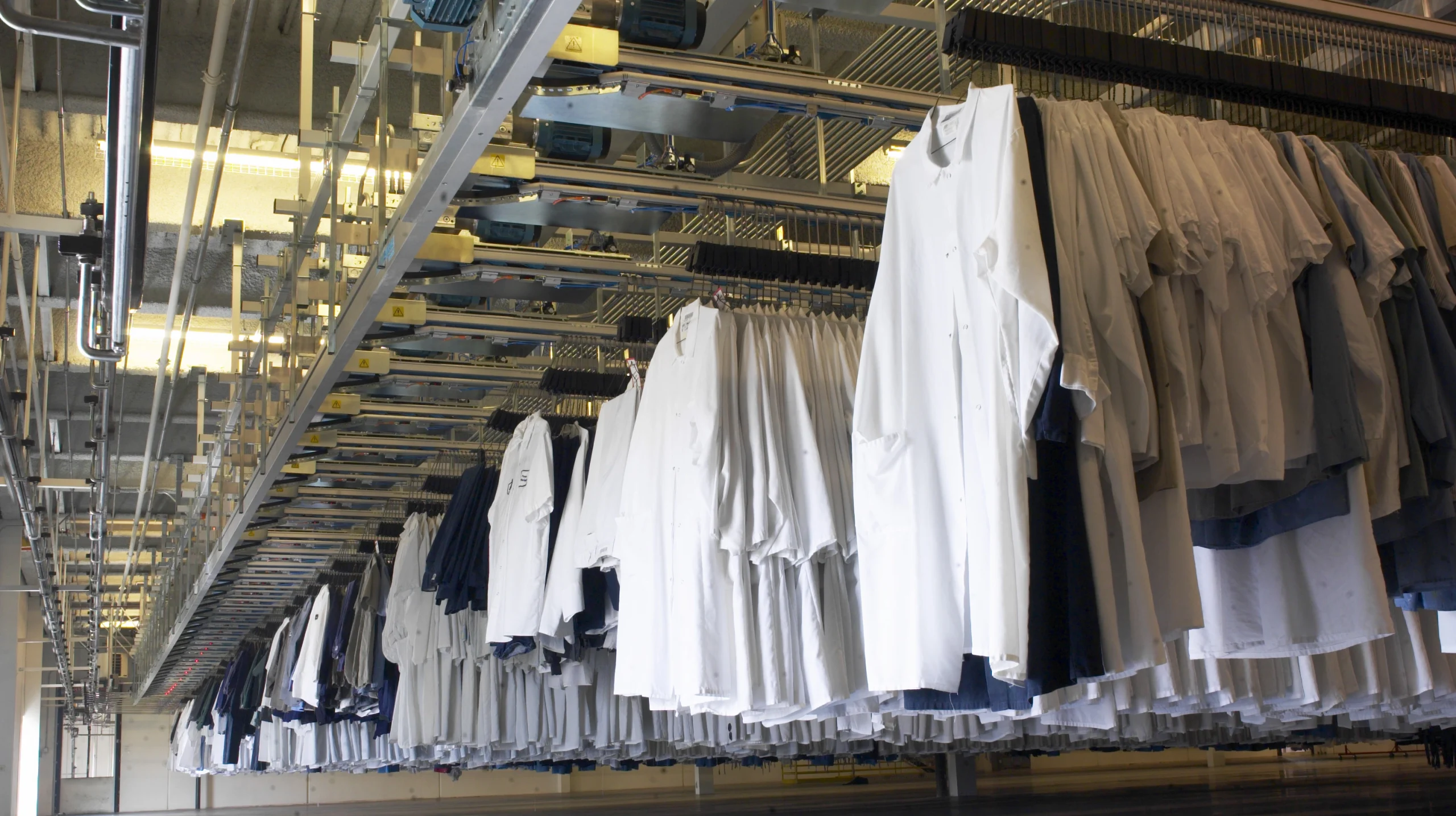
Beyond asset protection, RFID technology offers significant operational and financial advantages for laundries seeking greater process control and efficiency. Every tagged item carries a unique identity, providing full traceability from issue through processing to return. When goods are read at reception, the system immediately confirms how many of each product type require processing. This enables more accurate production planning- washing, finishing and packing times can be forecast with greater precision. By comparing theoretical process times against actual performance at each stage, bottlenecks can be identified and addressed.
One laundry operation in Italy reported a reduction in processing costs of approximately 15% after implementing RFID and analysing performance variances in this way. Improved data visibility translated directly into improved efficiency. RFID also provides accurate lifecycle data. While many textile suppliers state that products are capable of 200-plus wash cycles, real-world performance can vary. By recording items removed from service due to wear, damage or abuse, laundries gain precise lifespan data by SKU and supplier. This evidence-based approach supports stronger purchasing decisions and supplier negotiations.
Quality control is enhanced during packing. When items are scanned out by pack, discrepancies- whether shortages or overcounts- are identified immediately. This can highlight manual packing errors or mechanical issues, such as faults with stackers at the back of ironers. Early detection prevents downstream service issues and reduces costly corrective actions.
Traditional physical stocktakes can also be minimised. With RFID, perpetual inventory becomes possible, providing continuous stock visibility without the operational disruption of large-scale manual counts. Customer service benefits are equally significant. When a customer requests additional stock, real-time data allows the laundry to confirm exactly how many of the requested items are currently in circulation at the property. This avoids unnecessary emergency deliveries, reduces transport costs and protects production flow.
Process transparency extends to rewash and scrap management. Items removed due to condition can be recorded and tracked, ensuring clarity over whether they have been replaced or returned. If not returned, this can be clearly documented on dispatch notes, reducing unnecessary customer queries and administrative time. Accurate scrap recording also enables precise forward purchasing. Orders can be based on verified data rather than estimation, reducing both overstocking and shortfall risk.
The list of potential efficiencies is not exhaustive. When processes are measured and controlled, additional savings often emerge. While the discussion here has not focused on charging customers for lost stock, improved system transparency and demonstrable data reliability can support more constructive conversations with customers about responsibility and asset management. In a capital-intensive industry where textiles represent a substantial proportion of turnover, RFID offers more than technological innovation- it provides measurable financial and operational control.